paulapps.com
Paul Apps Fine Art
Generic_Page_side_bar_final.jpgafricat_001.jpgafricat_002.jpgafricat_005.jpgafricat_003.jpgafricat_004.jpg


On the morning of the 9th May 2002, we introduced 4 new cheetahs into the camp with the hope that they would achieve the same success: with the goal being to relocate them to a game reserve or game park, thereby giving them a second chance in the wild where they belong! At the end of August the opportunity arose for one of the pairs to be relocated to a 27 000 ha private game reserve in Namibia. Since relocation, their well-being has been monitored on a regular basis and they are doing very well. The other pair of cheetahs are also monitored daily by radio-tracking them on foot and guests can participate in the tracking of these rehabilitated cheetahs on our "Cheetah Tracking Trail".
Although hunting is instinctive in carnivores, many of the cheetahs at AfriCat lack experience due to being orphaned or removed from the wild at an early age. This inexperience, as well as their conditioning to captivity, makes them unsuitable for release. The ten thousand-acre (4000 ha) TUSK Trust Cheetah Rehabilitation Camp provides these cheetahs with the opportunity to hone their hunting skills and become self-sustaining and thereby giving them a chance to return to the wild. The cheetahs are fitted with radio-collars prior to their release into the camp so that their welfare and progress can be closely monitored.
Once they have proved that they can hunt for themselves and cope on their own, they can be relocated to a private game reserve, where their progress will continue to be monitored. Besides giving orphaned cheetahs a chance to return to the wild, the success of this project provides other substantial benefits. It gives us the opportunity to assess whether rehabilitation is a successful means of conserving an endangered population and also allows for the number of cheetahs in captivity to be reduced.


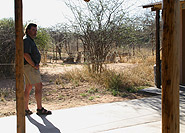
outside Africat offices
Africat is known internationally after featuring in an award winning documentary filmed for the Discovery Channel.
Namibia is home to the world's largest cheetah population. Namibia also has approximately 7000 commercial farmers on whose farms the majority of the country's leopards and cheetahs can be found. These large carnivores occasionally prey upon the livestock that roam unprotected in the veld. As a result, carnivores are often regarded as vermin by the livestock and game-farming community and are deliberately trapped. AfriCat has had to take on a large number of captive cats no longer wanted by other establishments. Among the carnivores being researched and rehabilitated by AfriCat are cheetahs and leopards.


Some of the hundreds of Cheetahs cared for at Africat 


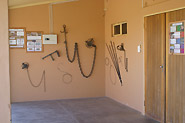
 killing devices displayed at Africat at Africat 
  
The 4000-hectare (10 000 acres) TUSK Cheetah Rehabilitation Camp was completed towards the end of 1999 and stocked with game by mid 2000. Our first cheetahs, 3 orphan sibling males, who had been with us since they were two months old, were released into the rehabilitation area in November 2000. These cheetahs were monitored daily and despite having no hunting experience were successful in sustaining themselves almost from the start with hunts that included kudu, impala, scrub hares, hartebeest, zebra, steenbok and duiker. Sadly two of the cheetahs died after 7 months. Tests indicated 'anthrax' as the cause of death. The surviving cheetah has been closely monitored but hasn't suffered any ill effects. The sad and unfortunate death of the two does not detract from the overall goal of the project - three orphan cheetahs had the instinct to hunt and were able to sustain themselves.
     
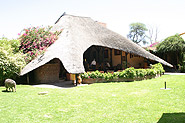
   Paradise, Okinjima lodge set up to assist
Africat charity to raise funds   

 back

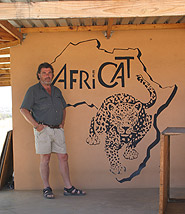
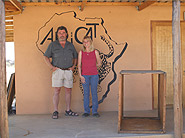
Carla and myself outside the Africat offices at Okinjima

Generic_Page_side_bar_final.jpgGeneric_Page_side_bar_final.jpgGeneric_Page_final_part_top_option2.jpg